
YouTube Shorts vs Long-form: Which is Better for Influencer Marketing?
YouTube Shorts now pulls 200 billion daily views, but long-form still drives 10× more conversions. Here's exactly when to use each format — backed by 2026 data.
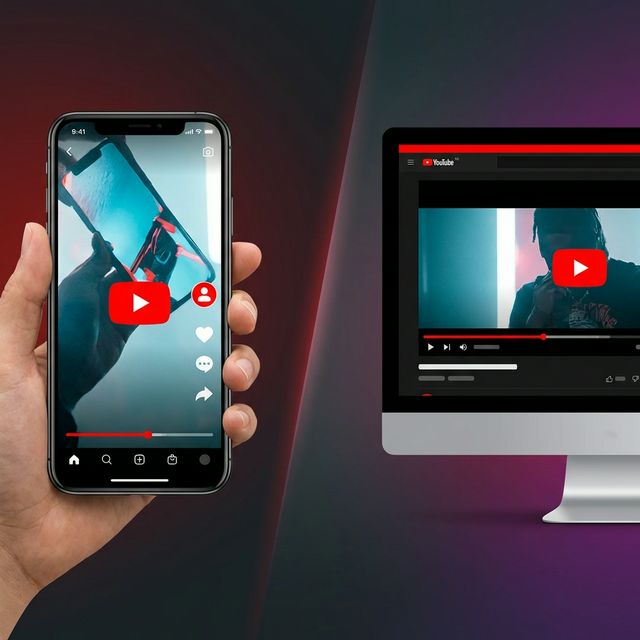
YouTube Shorts vs Long-form: Which Actually Wins for Influencer Marketing in 2026?
YouTube Shorts hit 200 billion daily views in 2026. That's nearly triple the 70 billion from 2025. Meanwhile, long-form videos now account for 73% of total watch time among U.S. viewers, with channels mixing both formats growing 41% faster than those sticking to one.
So which format wins for influencer marketing? Neither — and both. The real question is which format wins for your specific campaign goal. Here's what the data actually shows.
The Numbers You Need to Know
Before picking a side, look at where these formats actually stand in 2026:
| Metric | YouTube Shorts | Long-form Video |
|---|---|---|
| Daily Views | 200 billion | Lower absolute, higher intent |
| Engagement Rate | 5.91% (highest across all short-form platforms) | 3–8% average |
| Completion Rate | 70–90% | 40–70% average retention |
| Click-through to Links | 0.5–2% | 2–8% |
| Views from Non-Subscribers | 74% | ~30–40% |
| Monthly Active Users | 2 billion | Broader age range (18–65+) |
The headline stat? Shorts reach more people. Long-form converts more people. That distinction matters enormously for how you allocate budget.
When Shorts Dominate: Discovery and Awareness
Shorts are YouTube's discovery engine. 74% of Shorts views come from non-subscribers. That's massive for brand exposure campaigns where you need to introduce a product to audiences who've never heard of you.
Here's where Shorts genuinely outperform long-form:
Quick Product Showcases Think 15–30 second product demos, before/after transformations, and unboxing moments. A DTC skincare brand I tracked ran identical influencer campaigns across both formats — their Shorts averaged 380,000 views per video compared to 45,000 for long-form integrations. The catch? Comments were mostly fire emojis and "where can I buy this?" — high engagement, shallow retention.
Riding Trends for Viral Reach Branded hashtag challenges, trending audio integrations, and viral format adaptations thrive on Shorts because the algorithm amplifies discoverability. 83% of marketers increased YouTube Shorts spend in 2026 specifically for this reason.
Lower Cost, Higher Volume Shorts require simpler production: less editing, faster turnaround, and lower creator fees. A single long-form campaign budget can fund 5–8 Shorts from different creators, spreading risk and maximising reach.
The Limitation You've got 60 seconds (or up to 3 minutes with YouTube's expanded limit). That's not enough time for detailed product explanations, comprehensive CTAs, or the kind of storytelling that builds lasting brand association. People see your brand on Shorts. They don't necessarily remember it an hour later.
When Long-form Wins: Trust, Education, and Conversions
Long-form is where buying decisions happen. When someone watches a 15-minute video about your product, they're making a genuine time investment. That signals intent far beyond a swipe-through.
A September 2025 study found that long-form videos generate 10× more views and 5× more meaningful comments than short-form across comparable creator audiences. And here's the kicker: 51% of YouTube users specifically prefer engaging with brand content in long-form.
Complex Products Need Breathing Room A B2B SaaS company I followed struggled badly with Shorts because their product genuinely required explanation. When they pivoted to detailed tutorials and case study integrations with mid-tier creators, trial signups jumped 3.2× despite lower view counts. The viewers who showed up were pre-qualified and ready to act.
Evergreen SEO Value Long-form videos rank in YouTube and Google search for months or years. A Shorts video has a shelf life of days. For products where customers search for solutions (finance tools, software, professional equipment), long-form content compounds its ROI over time.
Higher Conversion Rates The 2–8% click-through rate on long-form dwarfs the 0.5–2% on Shorts. When a creator spends 8 minutes demonstrating your product, explains the pricing, addresses objections, and drops a link — people actually click. Long-form content also allows for multiple touchpoints within a single video, reinforcing the message without feeling repetitive.
The Hybrid Strategy: What Top Brands Actually Do
The fastest-growing channels in 2026 use a 30/70 split — 30% Shorts for discovery, 70% long-form for depth. Here's how smart influencer teams are structuring campaigns:
Step 1: Cast the Net with Shorts Partner with 4–6 creators for quick, personality-driven Shorts that introduce your product. Focus on attention, not conversion. Budget: ~30% of total campaign spend.
Step 2: Go Deep with Long-form Select 2–3 creators from your Shorts batch (or different creators who align with your buyer persona) for comprehensive reviews, tutorials, or "day in my life" integrations. Focus on education and trust. Budget: ~60% of spend.
Step 3: Retarget and Amplify Use the remaining 10% to boost top-performing content from both formats through YouTube Ads. Shorts content retargets for awareness; long-form retargets for conversions.
This funnel approach works because it mirrors how people actually make purchase decisions: they discover → research → decide. Shorts handle discovery. Long-form handles the rest.
Audience Differences That Affect Your Choice
Your target demographic should heavily influence format selection:
Shorts skew young and mobile. The core audience is 13–34, scrolling during downtime, consuming passively, and making fast engagement decisions. They're less likely to visit external links but more likely to follow creators for future content.
Long-form attracts intent-driven viewers. The audience spans 18–65+, with a mix of mobile and desktop viewing. These viewers actively search for specific information, invest in completing videos, leave thoughtful comments, and are significantly more likely to click through to external sites and make purchases.
The Gen Z Factor Here's something that shifts the calculus: Gen Z increasingly uses YouTube as a search engine. They're searching for "best budget laptops 2026" and finding both Shorts and long-form results in the same feed. Google has started integrating YouTube Shorts directly into search results, which means Shorts content now has SEO discovery potential that didn't exist a year ago.
Cost Breakdown: Where Your Budget Goes Further
Shorts Campaign (Awareness Focus)
- Creator fees: $500–$5,000 per Short (micro to mid-tier)
- Production: Minimal (creators shoot natively)
- Volume: 6–10 pieces per campaign
- CPM: Typically lower; optimise for impressions
- Best for: Product launches, seasonal campaigns, trend-jacking
Long-form Campaign (Conversion Focus)
- Creator fees: $2,000–$25,000 per video (mid to macro-tier)
- Production: Higher (scripting, b-roll, editing)
- Volume: 2–4 pieces per campaign
- CPM: Higher per view, but better cost-per-conversion
- Best for: Evergreen products, SaaS, complex services, high-ticket items
Rule of thumb: if your product costs under $50 and the purchase decision is impulse-driven, lean heavy on Shorts. If it costs over $100 or requires explanation, long-form will generate better ROI.
What's Coming Next
A few shifts worth watching as you plan campaigns into late 2026 and beyond:
- 3-minute Shorts are fully rolling out, blurring the line between formats. Expect hybrid content that's too long for a typical Short but too punchy for traditional long-form.
- Shorts monetisation is improving. YouTube's ad revenue sharing for Shorts is getting closer to long-form rates, which means more top-tier creators will invest in quality Shorts rather than treating them as throwaway content.
- Shopping integration in both formats continues to mature. Shorts with direct product tagging are converting better each quarter, which may close the conversion gap.
- 85% of marketers plan to maintain or expand long-term influencer partnerships in 2026, shifting away from one-off ad placements. This trend favours long-form creators who can build ongoing brand narratives.
Making the Right Call
Choose Shorts when your goal is maximum reach on a limited budget, your audience is under 35, you're launching something new, or your product is visual and doesn't need explanation.
Choose long-form when your product requires education, you're targeting decision-makers, you want evergreen SEO value, or your campaign goal is direct sales and conversions.
Use both when you have budget for a proper content funnel, you're targeting multiple demographics, or you want maximum channel growth — because channels using both formats grow 41% faster.
The brands getting the best results right now aren't asking "Shorts or long-form?" They're asking "how do we use each format for what it does best?" That's the only question that leads to a real answer.
Explore More
- Business Category — Explore monetization and growth strategies for your channel.
- Start a Faceless Channel — A complete guide to building a channel without showing your face.
- Best Thumbnail Makers — Tools to increase your click-through rates on long-form videos.